scrapewithclaude.com
Claude can give you superpowers, and most people have no idea what it's actually capable of. Scraping is one of them. At its core it's just telling Claude to go out on the internet and find you something. A list of companies. The software they run. The people who work there.
You give it a few tools and a little bit of instruction, and what comes back will blow you away.
So I wrote the whole system down as a playbook and built a site that teaches it. All of it free.
scrapewithclaude.com →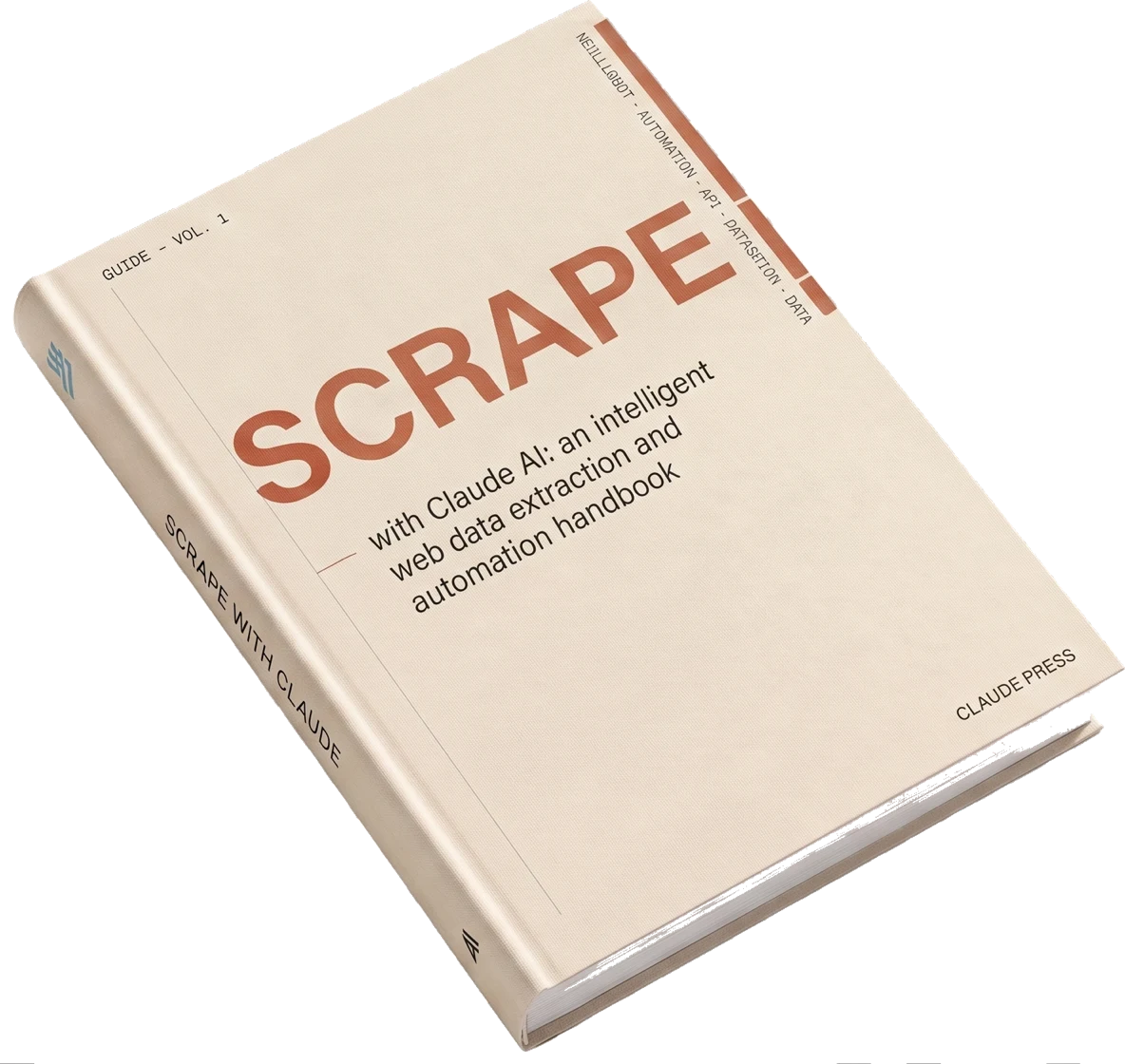
It's for the people whose job is finding customers: marketers, sales, rev ops. This space is brand new and moving fast, and almost nobody is sharing the really good stuff. The people who figure it out keep it quiet. I think it's more fun to give it away.
The centerpiece is the playbook. One story, a software company selling to golf courses, carried through the three reasons anyone scrapes: build the list, create the content, find the signal. Then seven techniques for getting data off any website, 30 free data sources, four copy-paste playbooks, and a five-minute setup. Real screenshots, real run logs, real costs.
Around it, the site does the quiet work. Every technique and every tool gets its own page, each one aimed at a keyword somebody actually searches. Those pages are the way in. The playbook is where they land, and the email list is what compounds.
What's in the playbook
- Three reasons to scrape, one storyA booking-software company works 16,000 golf courses from flat list to ranked pipeline to outbound.
- The signal chapterWhat a prospect's own website tells you that changes the pitch. The argument against fake personalization.
- Three copy-paste playbooksFind the companies, find the contacts at three cents a verified email, run the outbound.
- A five-minute setupOne paste into Claude Code and the scraping machine is built. Claude installs what's missing.
The plays
- What software is this company running?Read a site's page source and tell which tools it runs. Shown on dentists, works anywhere.
- Map a tool's entire customer baseBacklink and subdomain footprints hand you a SaaS product's full customer list.
- Find the hidden subdomainsCertificate logs and wordlists surface the endpoints that aren't in the nav.
- Catch the JSON the site already loadsMost dynamic sites fetch clean JSON, then draw it. Grab the JSON, skip the page.
- Read the raw HTML, let the LLM parse itOne request, one prompt, fields by meaning instead of brittle selectors.
- Scrape the sites that fight backA headless browser renders the JavaScript-only pages that a plain request can't see.
- Unlock the ones that still block youA residential proxy gets past hard blocks. The last and most expensive tier.
How it's built
Stack
The idea behind it
Note
The sample data on every play is anonymized. The techniques are the point, not anyone's data. The whole thing is free to read and free to copy.